

Short-Term Effects vs. Sustained Response
Immediate killing and long-term function must be evaluated together

Simulate how genetic and drug interventions affect cell states and functions to identify the key genes, pathways, and regulatory mechanisms driving disease phenotypes, accelerating the discovery, prioritization, and validation of candidate targets.

Build virtual cells that respond to genetic, pharmacological, and environmental interventions, simulating state changes, functional responses, and fate transitions across cell types and biological contexts to support cell research and engineering design.

Integrate multicellular, multi-omics, spatial microenvironment, and longitudinal disease data to reconstruct disease states and their progression, understand cell–cell interactions and disease heterogeneity, and predict the systemic impact of different intervention strategies.

Drug Perturbation and Virtual Clinical Trials in the Tumor Microenvironment (TME)

AI-Optimized Directed Differentiation Process for Stem Cells

Genetic Engineering and Functional Optimization of CAR-T Cells

AI-Driven Discovery of Skin Anti-Aging Targets
Applicable Areas
Autologous CAR-T
Allogeneic (Universal) CAR-T
In Vivo CAR-T

Short-Term Effects vs. Sustained Response
Immediate killing and long-term function must be evaluated together

Engineering Effects Depend on Context
Donor, CAR design, and antigen conditions all affect outcomes

Limited Resources for Combinatorial Screening
As candidate combinations grow, evidence-based prioritization is needed

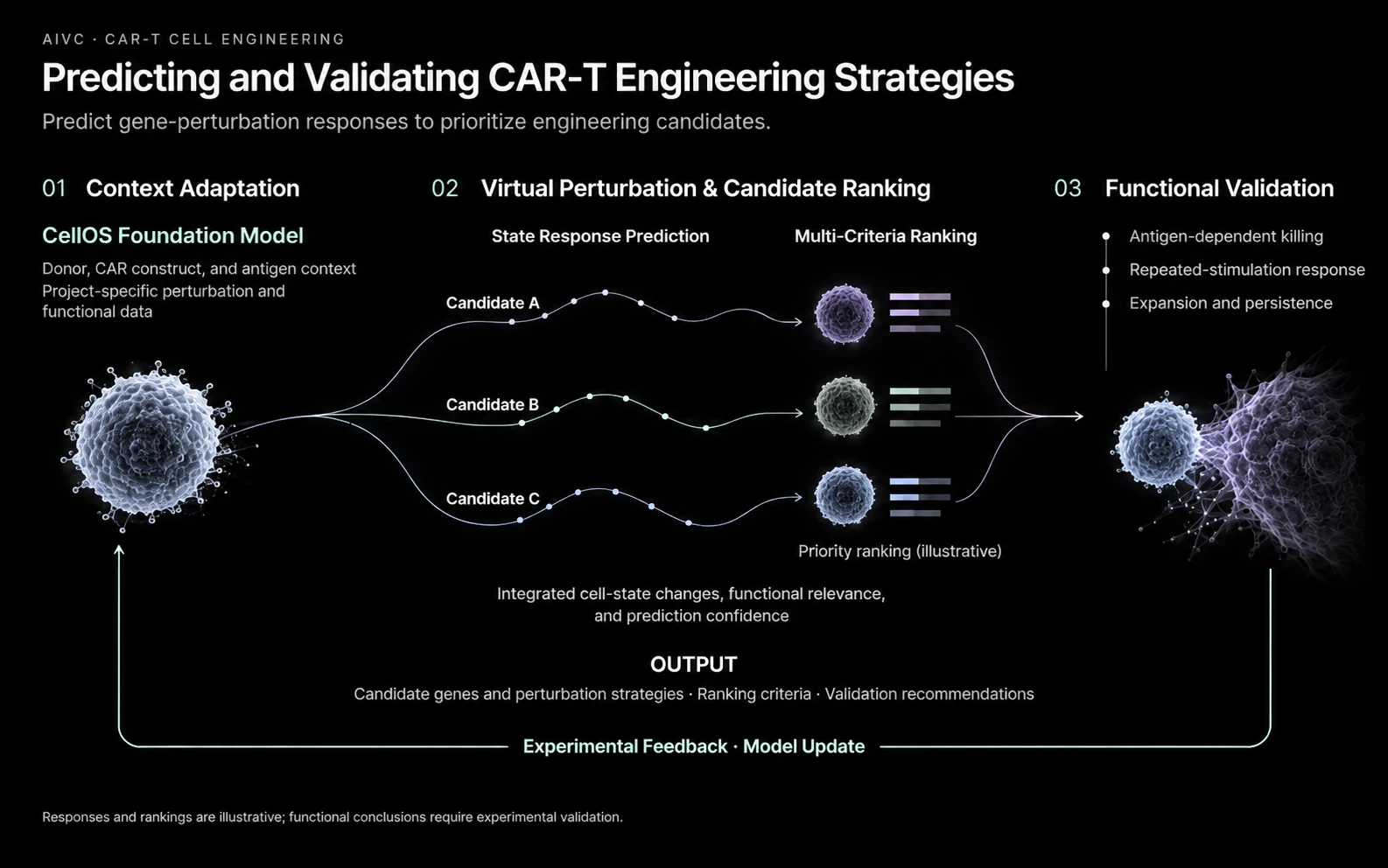


 01

Screen potential functional optimization targets and identify which genes and perturbation strategies to validate first
 02

Show the cell state changes induced by candidate perturbations and explain the basis for prioritization
03

Design in vitro functional validation plans and use experimental results to evaluate prediction performance and calibrate the model


Narrow the Candidate Pool
Up-Front Engineering Assessment
Support Multi-Objective Trade-Offs
Faster R&D Iteration